ByJohn A
How Ethereum Supports Decentralized Applications
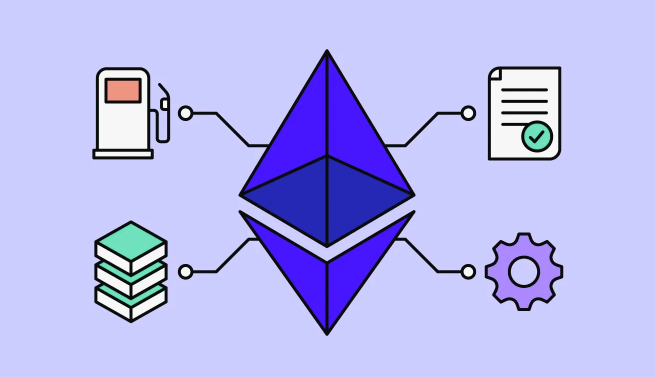
Ethereum provides a concrete execution layer (EVM, state transitions) and a secure consensus mechanism that enable predictable cross-layer interactions. Its gas model translates actions into measurable costs, guiding scalable DApps and resource budgeting. Decentralized governance and interoperability facilities support on-chain voting, dispute handling, and cross-chain compatibility. Real-world DApps leverage verifiable credentials, DeFi primitives, and censorship-resistant rails, while privacy-focused designs protect user sovereignty. The framework invites deeper examination of how these pieces cohere under evolving constraints.
The Ethereum Stack: Architecture, State, and Consensus
The Ethereum stack comprises a layered architecture that integrates the execution layer (the EVM and state transitions), the consensus layer (network-wide agreement on the canonical chain), and the network and data availability components that facilitate peer discovery and data propagation. It clarifies scaling myths while confronting security tradeoffs, delivering precise primitives for developers pursuing freedom, efficiency, and predictable cross-layer interactions.
Gas, Fees, and Settlement: A Practical Cost Model for DApps
Gas, fees, and settlement form the core of a practical cost model for DApps on Ethereum, translating user actions into measurable, predictable resource usage. The model emphasizes gas pricing mechanisms and fee decomposition to reveal the true expense of operations, enabling developers to optimize contracts. It highlights predictable settlement flows, minimizing variability, and empowering builders to design cost-efficient, scalable applications.
Decentralized Governance for Builders and Ethereum Interoperability
Decentralized governance mechanisms provide builders with structured pathways to influence protocol updates, dispute resolution, and ecosystem incentives while preserving core security and interoperability guarantees.
The approach enables modular decision-making, on-chain voting, and merit-based governance signals, reducing central bottlenecks.
Ethereum interoperability is maintained through standardized interfaces and cross-chain compatible proposals, ensuring cohesive upgrades while safeguarding reliability, security, and freedom to innovate within decentralized governance.
See also: How Ethereum Smart Contracts Work
Real-World DApps on Ethereum: Finance, Identity, and Beyond
Real-World DApps on Ethereum illustrate how on-chain logic governs financial primitives, identity attestations, and ecosystem services at scale.
This section surveys practical deployments: decentralized finance protocols, verifiable credentials, and service rails enabling censorship-resistant interactions.
Dapp onboarding emphasizes streamlined onboarding flows and risk-aware UX, while privacy first designs balance transparency with selective disclosure and user sovereignty across interoperable layers.
Conclusion
In Ethereum’s architecture, the stack orchestrates complexity into reliable interactions, while state and consensus render determinism from entropy. The cost model translates ambition into measurable boundaries, curbing waste yet inviting innovation. Governance and interoperability act as guardrails and gateways, enabling collaboration without centralization. Real-world DApps illuminate promise—finance, identity, and beyond—but also reveal friction, risk, and the need for robust standards. Juxtaposed, capability and constraint together illuminate a path: interoperable, accountable, scalable decentralized applications.